
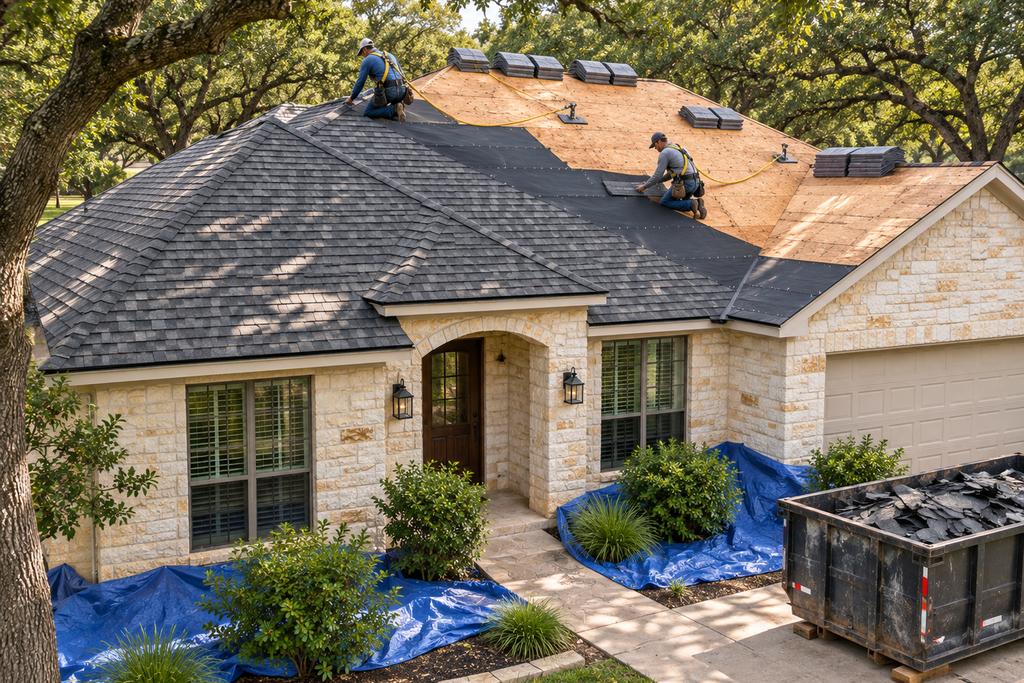
Once you have decided to replace your roof, the next questions tend to be practical. Where will the crew park? Can you stay home? What happens if damaged wood turns up? How will you know the work is finished?
Understanding the roof replacement process helps you prepare your household and know what to discuss with your contractor before work begins. A clear plan should cover the work on the roof and how the project will affect the property below it.
This guide focuses on a typical asphalt shingle replacement. Metal roofing and more complex projects can involve different installation steps and scheduling.
Before Installation: Confirm the Plan
Before materials arrive, review the written scope with your contractor. You should understand which roofing system is being installed, what work is included, and how questions or unexpected findings will be handled.
Confirm your material and color selections, the anticipated start date, and your main contact during the job. Ask how weather could affect scheduling and how you will receive updates.
This is also the time to clarify anything involving gutters, skylights, solar equipment, or other features that may require coordination. Avoid assuming that work on an adjacent component is included simply because the roof is being replaced.
Our guide to comparing roofing estimates explains how to evaluate the scope before installation begins.
Preparing Your Home and Yard
Ask your contractor for preparation instructions specific to your property. Access, landscaping, driveway layout, and the location of outdoor belongings can all affect the setup.
Useful questions include:
- Where should vehicles be parked before deliveries and work begin?
- Which areas need to remain clear for equipment and debris removal?
- Should patio furniture, planters, or other belongings be moved?
- How will landscaping and nearby surfaces be protected?
- Which entrance should your family use during the project?
Inside the home, discuss protecting belongings stored in the attic and securing fragile items that could be affected by vibration. Plan ahead for children, pets, and anyone sensitive to construction noise.
Preparing these details before the crew arrives can make the first morning easier.
Arrival, Setup, and Removal of the Existing Roof
The crew needs space to stage materials, establish access, and manage debris. Before removal begins, confirm where household members should walk and which areas are off limits.
Removing the existing shingles gives the crew access to the roof deck beneath them. Expect noise and activity around the house during this stage. Keep children and pets away from the work zone, including areas where debris is being collected.
If you need to leave during the day, discuss vehicle access beforehand. It is easier to arrange an accessible parking spot before equipment or a debris container blocks the driveway.
What Happens if Damaged Decking Is Found?
The decking is the surface that supports the roofing materials. Some concerns may be identified during the initial evaluation, while others become clearer after the existing covering is removed.
Before the job starts, ask how additional decking work will be documented, priced, and approved. If damage is found, request an explanation of the affected area and the proposed repair.
A useful conversation covers three points: what was found, what work is needed, and how it affects cost or timing. Photos can help you understand findings without entering the work area or climbing onto the roof.
You should know the approval process before an unexpected repair becomes an urgent decision.

Installing the Roofing System
A replacement involves more than the visible shingles. Underlayment, flashing, roof-edge details, ventilation components, and the selected shingles need to work together as a system.
The installation should follow the applicable requirements for the products and the property. Ask your contractor to explain which components are being replaced and how areas around chimneys, vents, valleys, and other transitions will be addressed.
Ventilation also deserves attention during planning. Our roof ventilation and moisture-control guide explains why the attic is part of the discussion.
For material choices and the services available, explore our shingle roofing options.
Cleanup, Walkthrough, and Project Records
Before work begins, ask what cleanup includes and when equipment and debris will be removed. At completion, discuss the roof, driveway, yard, and other areas affected by the project.
Use the walkthrough to raise questions about visible details, discuss any remaining items, and confirm whom to contact if a concern appears later. You do not need to climb onto the roof to participate; ask the contractor to explain completed work and provide photos where helpful.
Keep the final scope, invoices, product information, and applicable warranty documents together. Ask whether any registration is required and who is responsible for completing it.
A finished roof should come with a clear understanding of the work and the support available afterward.

Final Thoughts: Know What to Expect Before Work Starts
A roof replacement is easier to navigate when the everyday details are settled early. Knowing where to park, how to communicate with the crew, and how additional work will be approved helps you prepare for the disruption.
Ask questions before installation day and keep your project contact accessible. Clear expectations give you a better basis for evaluating the experience from the first delivery through the final walkthrough.
Frequently Asked Questions
Can I stay home during a roof replacement?
You may be able to stay home during a roof replacement, but discuss access and safety arrangements with your contractor first. Removal and installation can be noisy, which may make working from home, naps, or keeping anxious pets comfortable difficult. Ask which entrances will remain available and how to move safely around the property. If anyone in the household is particularly sensitive to noise or disruption, consider arranging another place for them to spend the busiest part of the day. The best plan depends on the household and the project setup.
How long does a roof replacement take?
The time needed for a roof replacement depends on the roof’s size, complexity, materials, condition, weather, and the work included. Ask for an estimated schedule based on your actual property rather than assuming a timeframe advertised for another home will apply. Clarify whether that estimate includes deliveries, installation, cleanup, and equipment removal. You should also know how updates will be communicated if the schedule changes. If you have travel plans, a home business, or another contractor scheduled, raise those details before agreeing on the start date.
What happens if it rains during the project?
Rain can change a roof replacement schedule, so ask your contractor to explain the weather plan before work starts. Discuss how forecasts affect the decision to begin, how exposed areas will be protected, and how a delay will be communicated. Avoid treating a tentative installation date as a guarantee that work will proceed regardless of conditions. If weather interrupts the project, contact the designated project representative for an update on the roof’s condition and the next steps. Homeowners should stay clear of the work area rather than attempting to inspect or adjust temporary protection themselves.
Should I replace my gutters at the same time as my roof?
Replacing gutters at the same time as a roof replacement can make sense when the existing gutters are damaged, sagging, undersized, or near the end of their life. The roof edge, drip edge, and gutters work together to carry water away from the home, so coordinating both projects can simplify scheduling and help the new edge details and gutters fit properly. If your gutters are in good condition, ask your contractor whether they will need to be detached, adjusted, or reinstalled during the roofing work. Our gutter installation team can review both together.
Will a roof replacement damage my landscaping or driveway?
A roof replacement can affect landscaping, driveways, and nearby surfaces because debris comes off the roof and equipment and materials need space on the property. Ask your contractor before work begins how flower beds, shrubs, lawn areas, and hard surfaces will be protected, and where the debris container and material deliveries will be placed. Point out sprinkler heads, outdoor lighting, delicate plants, and anything else that is easy to miss. During the final walkthrough, review the yard and driveway together and raise any concerns right away so they can be addressed while the crew and project contact are still involved.
Do I need to be home for the final walkthrough?
Ask your contractor whether you need to attend the final walkthrough and arrange a time that allows you to discuss questions. Being available gives you an opportunity to review cleanup, ask about completed work, and identify any outstanding items. If you cannot attend in person, agree on another way to receive the completion update, photos, and project documents. Confirm whom to contact afterward and keep a written record of anything still awaiting attention. The goal is to finish with a shared understanding of what is complete and what, if anything, remains.
Plan Your Roofing Project with Great Hills Roofing
If you are considering a new roof for your Austin-area home, Great Hills Roofing can assess its condition, explain your options, and help you understand the proposed work.
Schedule a free roof inspection to discuss your roof and the next steps.