

Hailstorms are a regular part of life in Central Texas, and even a short storm can leave homeowners wondering whether their roof was damaged. The difficult part is that hail damage is not always obvious from the ground. A roof can look normal from the street while still having bruised shingles, granule loss, damaged flashing, or broken seals that may lead to problems later.
If your Austin home has just gone through a hailstorm, the best approach is to stay safe, document what you can, and have the roof evaluated before small problems turn into leaks or more extensive damage. Taking the right steps early can also give you a much clearer picture of whether the roof simply needs monitoring, a focused repair, or more significant work.
1. Check Your Property Safely After the Storm
Once the storm has passed and conditions are safe, start with a ground-level inspection of your property. You do not need to climb onto the roof to identify clues that hail or wind may have affected the home.
Look for obvious signs such as:
- Shingles or roofing debris in the yard
- Dents in gutters, downspouts, or metal roof vents
- Damaged siding, window screens, fencing, or outdoor equipment
- Tree limbs or debris resting on the roof
- New water stains or dripping inside the home
Damage to metal gutters, vents, or other surfaces can be a useful clue that the hail was strong enough to affect roofing materials as well. However, homeowners should avoid walking on the roof themselves, especially immediately after a storm. Wet shingles can be slippery, and damaged roof decking or loose materials may create additional safety risks.
If you already see obvious signs of storm damage, our storm damage roofing page explains more about the inspection process and what homeowners can expect next.
2. Look for Signs of Hail and Wind Damage
Hail can affect a roof in several different ways depending on the size and density of the hailstones, wind speed, roof pitch, roofing material, and age of the roof. Asphalt shingles may develop bruised impact areas, lose protective granules, or suffer damage to the underlying mat even when they remain in place.
Wind can create a different type of problem by lifting shingle edges, weakening seals, loosening flashing, or tearing materials away completely. When hail and strong winds occur together, the roof may experience both impact damage and movement at vulnerable areas such as ridges, valleys, penetrations, and edges.
Some of the most common warning signs include dark impact spots, exposed asphalt where granules have been knocked loose, displaced shingles, damaged flashing, and dents in metal components. Interior symptoms may include ceiling stains, damp insulation, or moisture appearing after heavy rain.
Not every hail impact automatically means a roof needs replacement. The important question is whether the damage is isolated or widespread and whether it has compromised the roof’s ability to continue protecting the home.
Homeowners interested in more durable options can also review our guide to hail-resistant Class 4 roofing and IBHS FORTIFIED roofing systems.

3. Document What You Can Before Repairs Begin
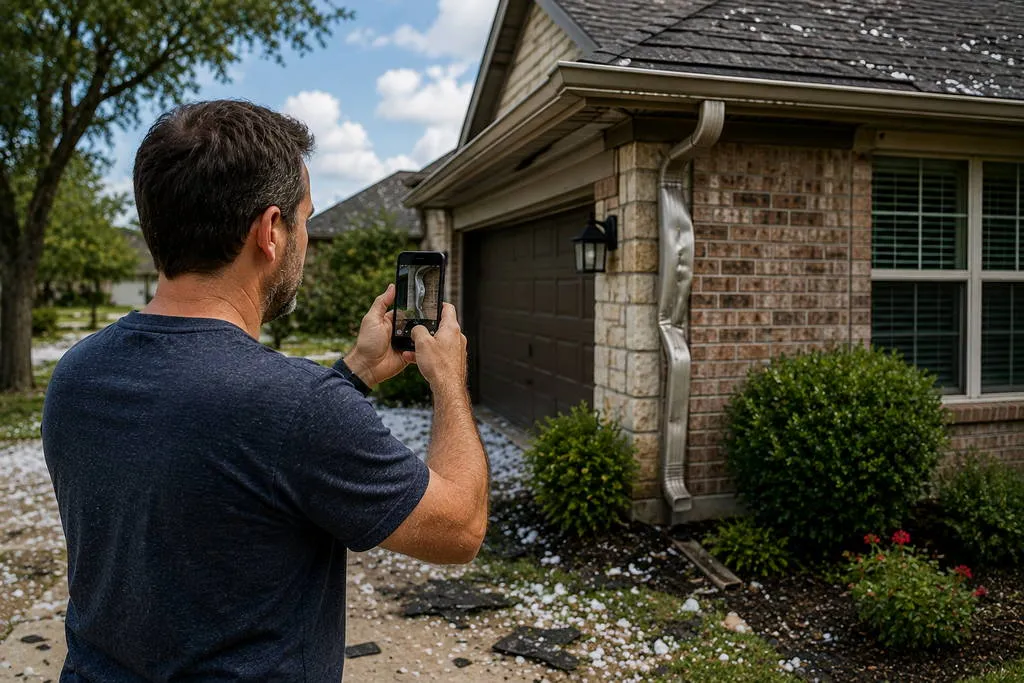
Good documentation can be valuable after a severe storm, especially when damage may be related to a homeowners insurance claim. Before permanent repairs begin, take photos of any visible damage you can safely document from the ground and inside the home.
Useful documentation may include photos of damaged gutters, siding, fencing, roof debris, fallen branches, ceiling stains, or other signs of impact. It is also helpful to note the date of the storm and keep any photos or inspection reports together with your roofing records.
If water is actively entering the home, temporary measures may be needed to prevent additional damage. However, the goal should be to stabilize the situation without covering up or removing evidence before the roof has been properly evaluated.
Insurance coverage varies by policy, roof condition, cause of loss, deductibles, and other factors. A roofing contractor can document the physical condition of the roof, but the insurance company ultimately determines whether damage is covered under your policy.
4. Schedule a Professional Roof Inspection
A professional roof inspection is one of the most important steps after a significant Austin hailstorm because much of the damage homeowners worry about cannot be confirmed from the ground.
During the inspection, a roofing professional will typically evaluate the shingles, flashing, penetrations, vents, gutters, valleys, ridges, and other vulnerable areas. They may also check attic or interior spaces if there are signs of moisture intrusion.
The inspection should help answer several important questions:
- Did the storm cause actual roofing damage?
- Is the damage isolated or spread across multiple roof slopes?
- Are the shingles still serviceable?
- Is there evidence of leaking or damaged decking?
- Would a repair provide a dependable result?
For a full breakdown of the evaluation process, read our article on what happens during a professional roof inspection in Austin. You can also review our guide on how often Austin homeowners should have their roof inspected.
5. Repair, Replace, or Monitor? What Happens Next
Finding hail damage does not automatically mean the entire roof needs replacement. A newer roof with minor, isolated damage may be a good candidate for repair, while an older roof with widespread impacts, brittle shingles, recurring leaks, or significant granule loss may require a different approach.
The roof’s age and pre-storm condition matter. If the roofing system was already nearing the end of its useful life, widespread storm damage may make replacement more practical than continuing to repair individual areas. On the other hand, if the roof is relatively young and the surrounding materials remain in good condition, a targeted repair may be enough.
The best decision comes from looking at the roofing system as a whole rather than focusing on one visible impact mark. Our guide to whether you should repair or replace your roof in Austin explains the factors homeowners should consider when comparing those options.
Final Thoughts
After a hailstorm, it is easy to either assume the worst or ignore the roof completely because there is no visible leak. Neither approach is ideal. Hail damage can be subtle, and problems that are difficult to see today may become more significant after months of heat, wind, and rain.
The safest approach is to document what you can, avoid climbing onto the roof yourself, and schedule a professional inspection if the storm was significant or you notice signs of property damage. Knowing the true condition of the roof gives you the information needed to decide whether the best next step is repair, monitoring, or replacement.
FAQs
How can I tell if hail damaged my roof?
Common signs of hail damage include missing granules, dark impact spots, bruised shingles, dented roof vents, damaged gutters, and new leaks or water stains after a storm. However, many hail impacts are difficult to identify from the ground. A professional roof inspection is the best way to determine whether the storm caused meaningful damage.
What size hail can damage an asphalt shingle roof?
There is no single hail size that guarantees roof damage because the results depend on wind speed, hail density, roofing material, roof age, and the angle of impact. Even smaller hail can affect an older or already-weathered roof, while newer shingles may withstand the same storm with less damage. The condition of the roof should be evaluated after a significant hail event rather than relying on hail size alone.
Should I have my roof inspected after every Austin hailstorm?
You do not necessarily need an inspection after every minor storm, but it is a good idea after significant hail, strong winds, or any storm that causes visible property damage. Dented gutters, damaged siding, fallen branches, or roofing debris can all indicate that the roof may also have been affected. Older roofs should generally be monitored more closely after severe weather.
How soon after a hailstorm should I have my roof inspected?
It is usually best to schedule an inspection soon after conditions are safe, particularly if the storm produced large hail or visible property damage. An early inspection can identify problems before additional rain or heat worsens them and creates a clearer record of the roof’s post-storm condition. Active leaks should be addressed as quickly as possible.
Will homeowners insurance cover hail damage to my roof?
Homeowners insurance may cover hail damage when hail is a covered cause of loss under the policy, but coverage varies. The roof’s age, condition, deductible, policy terms, and the insurance company’s evaluation can all affect the outcome. A roofing contractor can document physical roof damage, while the insurance carrier determines whether the claim is covered.
Schedule a Hail Damage Roof Inspection
If your Austin home has recently been through a hailstorm, Great Hills Roofing can inspect the entire roofing system and help you understand whether the storm caused damage that requires attention. We will document what we find, explain the condition of the roof clearly, and help you understand whether repair, monitoring, or replacement is the most practical next step.
Visit our contact page to schedule a hail damage roof inspection or speak with our team.